

A Nation of Everyday Heroes
As we celebrate Hanukkah, historian and thinker Gil Troy calls on us to recognize Israel’s wartime heroes — and the Israelis who honor them by living heroic lives

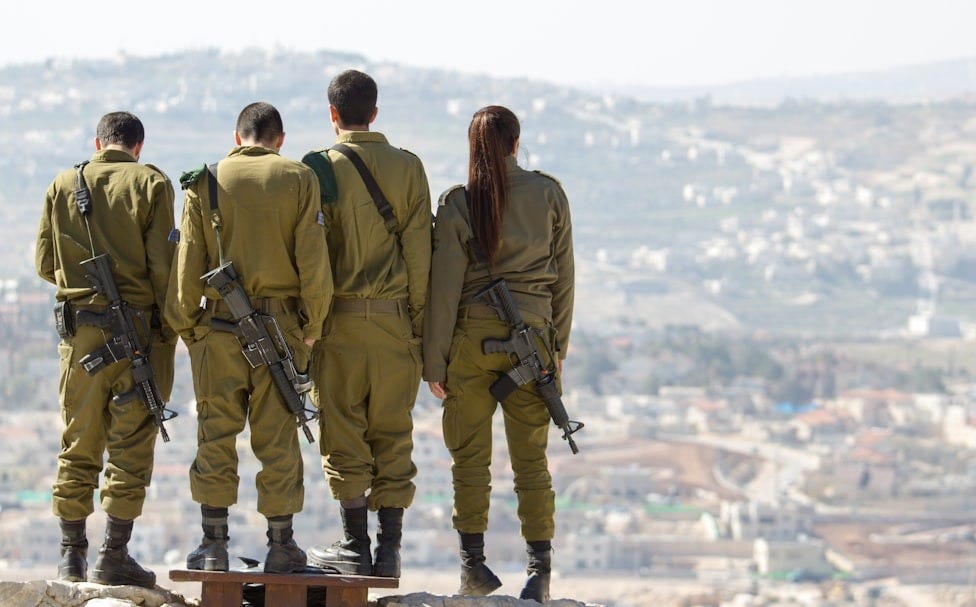
Editor’s note: Hanukkah is a time to celebrate heroism, from the Maccabees of yore to the heroes of today, including those who displayed extraordinary valiance just this week in Bondi Beach. In this moving and timely essay, historian and Zionist thinker Gil Troy urges us to consider why the war of the past two years has produced so few classic “war heroes”— and what that reveals about Israel as a nation. Shabbat Shalom and happy Hanukkah from Jerusalem. — A.M.
In their wrenching, miraculously successful defense of Israel — and the West — since October 7, the soldiers of the Israel Defense Forces performed remarkable feats. Military colleges will long spotlight the spontaneous, grassroots counterattack that terrible day, the Hezbollah beeper ruse, the twelve-day war with Iran, and Israel’s defiance of expert predictions that subduing Gaza would cost thousands of soldiers’ lives.
Yet despite all these heroics, the fighting produced few classic war heroes.
Hostage-heroes emerged — from Hersh Goldberg-Polin to Noa Argamani to Eli Sharabi — and bestsellers detail the many superheroes of October 7: Aner Shapira throwing back seven grenades before being killed by the eighth; Rachel Edry calming Hamas home invaders with freshly baked cookies; police officers like Bedouin Israeli Ramo Alhuzeil, who saved dozens of Nova festival goers; Captain Daniel Perez, who valiantly led his tank crew to battle, holding off the invaders for hours until he was killed; and Sergeant Eden Nimri, the 18-year-old who sacrificed her life so eleven comrades could escape. But since that day, although many Israelis personally know extraordinary soldiers, Idan Amedi may be this war’s one broadly recognized hero — and he was already a household name.
To historians, “war heroes” include generals like Washington, Grant, Dayan, and Rabin, and against-all-odds combat fighters like Sergeant York, Audie Murphy, and Avigdor Kahalani in 1973. War heroes are Ariel Sharon crossing the Suez Canal, and Yoni Netanyahu at Entebbe. We hail acts of self-sacrifice from Nathan Hale — “I only regret that I have but one life to lose for my country” — to Joseph Trumpeldor’s “It’s good to die for one’s country,” to Major Roi Klein shouting “Shema Yisrael” while jumping on a grenade in order to save his soldiers’ lives.
The word “hero” is often overused, but democracies at war need them. They embody the war aims, the shared values, the national soul, and help societies navigate war’s contradictions — unleashing violence to secure peace, fighting ethically while violating the usual strictures against killing. Heroes, ordinary people doing extraordinary things, reassure others that their cause is just and that the break from normal life is temporary.
This dynamic works in civilian life, too. The world was so deeply moved by the Bondi Beach heroes — from the Syrian-born Ahmed al-Ahmed to the two sixty-something Jewish immigrants from the Soviet Union, Boris and Sofia Gurman, all of whom struggled with the gunmen, the latter two losing their lives in the attempt — because they proved that ordinary people do, at times, rise to the occasion for the right reasons, even at an unfathomable price.
Israel’s shortage of classic war heroes in this war therefore tells a deeper story. It shows how Israel remains stuck in the October 7 trauma, how global hostility constrains Israelis, and how modern warfare — with its masked commandos, anonymous intelligence officers, and collective operations — obscures individual exploits. It also points to the real secret of Israel’s military success: thousands of dedicated Israelis whose names remain unknown.
Despite many triumphs, Israel is still reeling from October 7. Focusing on hostage-heroes allows Israelis to admire resilience while grappling with the inconceivable cruelty inflicted on them. “We’re talking about innocent people taken from their beds, from a dance party — taken into pure hell,” Noa Argamani said after her rescue. Their extreme experiences have become the national prism, reflecting the fear, confusion, and pain still gripping Israelis. Their tales of suffering also allow Israelis to indict Hamas, Palestinian terror, and the world’s indifference, without moral ambiguity.
Addressing the UN in March 2025, Eli Sharabi — who lost his wife, daughters, and brother — asked: “Where was the United Nations? Where was the Red Cross? Where was the world?” He exposed Hamas’s theft of humanitarian aid: “Hamas eats like kings while hostages starve.” Mocking the claim that Gazan civilians were uninvolved, he added: “No one in Gaza helped me. The civilians in Gaza saw us suffering… They were definitely involved.”
The hostages have become secular prophets for a nation lacking unifying leadership. Omer Wenkert found God in the tunnels, chanting Psalm 23: “Though I walk through the valley of the shadow of death” — just as Natan Sharansky had in the Soviet gulag decades earlier. Many hostages once distant from Judaism stayed sane through ritual: Keith Siegel reciting the Shema daily; Omer Shem Tov calling prayer his “oxygen”; Agam Berger refusing to cook on Shabbat; six hostages subsequently murdered lighting Hanukkah candles together in the tunnels; Eliya Cohen imagining wrapping tefillin and leading fellow hostages in kiddush on Friday nights. And many drew strength from Hersh Goldberg-Polin, who shared Viktor Frankl’s insight: “He who has a why can bear with any how.”
Meanwhile the world’s frenzy to criminalize Israel has pushed battlefield heroics underground. Forgetting the Hamas charter’s genocidal vows and ignoring how democracies fought in Iraq and Afghanistan, international bodies distorted the laws of war to target Israel. Soldiers now fear harassment abroad; that makes them thankful their identities are blurred.
Modern warfare further hides its heroes: we will never know who sold Hezbollah those beepers, who maneuvered around Iran to position drones near military bases, who detected Nasrallah’s vulnerability, or who identified and tracked key figures in Iran’s nuclear weapons program so they could be eliminated simultaneously. Scientists, engineers, and technicians — from laser defense innovators to mechanics who retrofitted aircraft — have played essential roles that cannot be personified.
As in America’s War on Terror, few Israeli figures emerged as iconic heroes. Pat Tillman became famous because of his NFL career; others like Chris Kyle or Michael Murphy achieved recognition through books and films. Perhaps future Israeli storytelling will highlight individuals, but the essence of this war has been collective action.
The 1,152 fallen soldiers’ ideals appear in the tournaments, good deed projects, and sites honoring them. Memorial stickers plastered across the country create a kind of prose poem to heroism: “Be the hero we need”; “Heroine in green, angel in white”; “Everyone who knew you knew you were a hero”; “You didn’t fight for hatred of those in front of you, but for love of those behind you”; “Be good”; “No matter what”; “Live for me.” All echo the Hebrew root g-b-r — to overcome, to strengthen, to be a hero.
These messages reflect the casual gallantry long woven into Israeli life: grandparents sleeping fitfully with grandchildren at the front; parents who, knowing what they know now, still escort their children proudly to induction; rising numbers of volunteers for combat units, including a sharp increase among women; professionals who could leave the country but stay because Israel is the only place they want to raise their families. It is evident in people keeping routines even when missiles fly, and in Israelis refusing to hide their identity abroad despite hostility.
Long after this phase of the war ends, Israelis will continue the everyday heroics of building the Zionist project — maintaining one of the world’s largest nonprofit sectors, sustaining high birthrates seen as a mark of optimism, and juggling ancient traditions, from lighting Hanukkah candles to celebrating Passover seders, with modern innovation in fields like AI, medicine, and pharmacology. Israel consistently ranks high in national happiness, as measured by community, purpose, and rootedness, despite being surrounded by enemies who seek and endeavor to destroy them.
Proverbs teaches, “The righteous fall seven times and get up” — as Jews have done throughout their roller-coaster history, including on October 7. Ethics of the Fathers asks, “Who are heroes? Those who conquer their urges” — including the urge to flee or to be too-vengeful. Joseph Campbell writes that a hero is someone “who has given his or her life to something bigger than oneself.” And the Hanukkah holiday we are currently celebrating teaches that an ever-escalating spiral of spiritual grandeur and physical derring-do produces humans ready to do whatever it takes for the people and ideals they cherish.
Heroism is collective, outward-facing, and often contagious. Heroes define a generation, exemplify its values, and inspire others to follow their example.
Israel’s modern Maccabees since October 7 have done all that and more — even if few become household names. As John F. Kennedy once said of his own wartime exploits, “It was involuntary. They sank my boat.” Israelis might say the same: barbarians invaded our country and butchered our loved ones. We should celebrate our citizen-soldiers’ impressive generational accomplishments, their astounding heroics, and the values that drove them and for which some lost their lives, leaving successors more than ever committed to living for them.
The philosopher William James wrote: “The greatest use of life is to spend it on something that will outlast it.” Israel’s wartime heroes lived such lives, and Israelis — everyday heroes — honor them by continuing to live with purpose and determination in the country they defended and will keep making better and better.
Professor Gil Troy is an American presidential historian and Zionist thinker who serves as a Senior Fellow at the Jewish People Policy Institute (JPPI) and as a Distinguished Scholar in North American History at McGill University. Last year he published, To Resist the Academic Intifada: Letters to My Students on Defending the Zionist Dream and The Essential Guide to October 7th and Its Aftermath. His latest e-book, The Essential Guide to Zionism, Anti-Zionism, Antisemitism, and Jew-Hatred, was recently published by JPPI and and can be downloaded from the institute’s website. He lives in Jerusalem.


 | A guest post by
|
Gil - The popularity of songs like גיבורי על by Hatikvah 6 (https://youtu.be/aYGd4HOend4?si=lZ4ii44aKT2hDpB3), and מולדת by Hanan Ben Ari (https://youtu.be/MZHU0MfZAMw?si=oYsq5Hh2DFYnfY2x) shows that there is a fair bit of internal recognition in Israeli society of the every day heroes.
English lyrics: https://youtu.be/CUaDobraZ1k?si=UHZYDGAhS8qrkNFi