


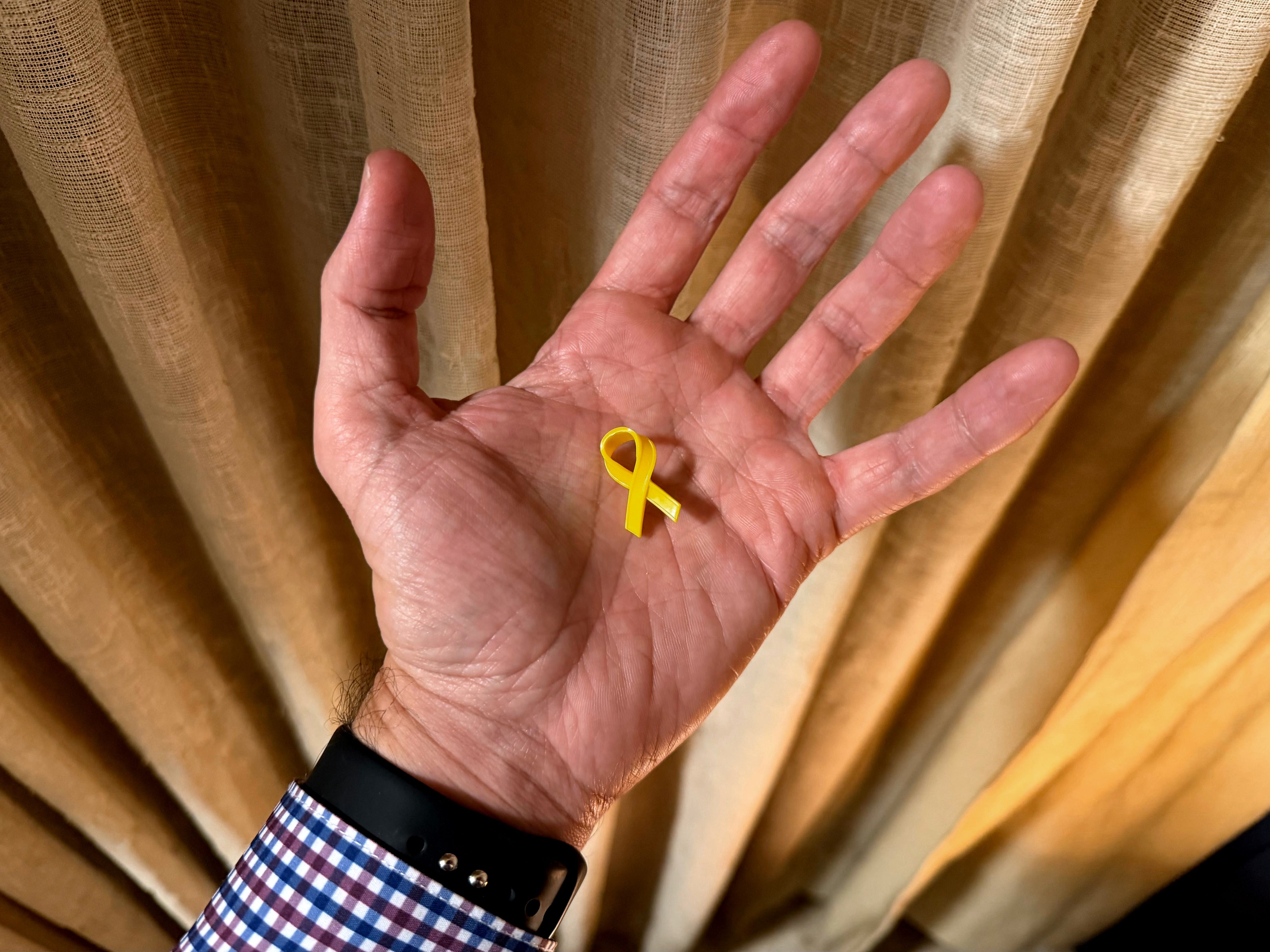
Some months ago, I took one of my suits to be cleaned at my neighborhood dry cleaners here in Jerusalem. When it came back, I removed the plastic garment bag and discovered a small hole in the jacket lapel. Annoyed by the damage to the fabric, I briefly considered complaining to my trusty dry cleaners before realizing what it was: the mark left by the yellow ribbon pin that had been there for the previous two years.
All of my suit jackets have borne those pins for two years and three months. This evening, I removed them once and for all.
The recovery of the body of the final Israeli hostage, 24-year-old Master Sgt. Ran Gvili, from Gaza and its return to Israel earlier today marks the close of one of the most painful chapters in Israel’s history.
“Rani has returned home,” said Itzik Gvili, Ran’s father. “He was the first one to go in fighting and the last one to return,” he added, alluding to his son’s heroism on October 7, 2023, when he battled terrorists for hours at Kibbutz Alumim before being killed in action, his body spirited away. “Thank you to the people of Israel.”
For 843 days since that terrible day, the hostage crisis has been a festering wound, a dark cloud hanging over Israel. Now the wound can begin to heal. The cloud is finally dissipating.
And we can breathe again.
The war that Hamas launched on October 7 is now over. Israel’s war objectives have been achieved. Hamas has been decimated; though it still exerts control over parts of Gaza and remains committed to Israel’s violent destruction, it no longer poses the threat to Israeli communities that it did on October 6. The residents of those communities have largely returned home and some of the kibbutzim have expanded; there are now more Israeli families living in areas near Gaza than there were before the war. And, as of today, there are no more Israeli hostages, living or dead.
Dramatic declarations at Davos notwithstanding, critical questions remain: about the disarmament of Hamas and the demilitarization of Gaza; what the territory’s future governance will look like; how to ensure Gaza’s population is thoroughly deradicalized; and how to prevent Hamas from seizing control and again transforming the territory into a base from which to attack Israel and murder Israelis. Even if Israel permits the Rafah Crossing to reopen in the coming days, as it has committed to do, it does not appear as though Israeli forces will be withdrawing fully from Gaza anytime soon.
Moreover, many of the challenges that have emerged over the past year will endure for many years to come. Our defense doctrine will need to be rethought and our economy refashioned. The unprecedented mental health crisis produced by the war will need to be tackled. The global assault on Israel and on Jewish communities around the world will need to be repelled. And we will need to rebuild trust between Israelis and the government bodies, institutions, and leaders that failed them on October 7 and have proven unequal to the task for much of the war. We will be exploring some of these challenges in Jerusalem Journal in the months ahead.
Yet this is a moment to pause, to take stock, and to reflect on all that we have endured and all that we have achieved over the past two years.
Caught by surprise and having suffered horrific loss and devastation, Israel swiftly rallied and responded with tremendous military might. A nation still reeling from the worst day in its history mobilized to support the families of the fallen, the wounded, and the hostages, as well as the hundreds of thousands of Israelis evacuated from their homes. Despite missile barrages, airport closures, and boycotts, the country’s economy powered ahead, emerging stronger than it was on the eve of the war. And Iran’s vaunted ring of fire — which had encircled the Jewish state and threatened to strangle it — lies in smoldering ruin, its various proxies defanged and the Islamic Republic itself wounded and humiliated.
Throughout it all, young Israelis — like Ran Gvili and the more than 1,100 other members of Israel’s security forces killed on October 7 and during the war, and the hundreds of thousands of soldiers and reservists who participated in the war effort — put their lives on the line in their country’s defense, engaging in acts of heroism and sacrifice reminiscent of bygone eras. It is they, we now know, who have been — and ultimately will be — Israel’s salvation.
When the soldiers of the IDF’s Combat Engineering Corps finally identified Gvili’s body in a Gaza cemetery earlier today, they realized they had accomplished one of the military’s most solemn missions throughout this war. “The tension in the field erupted,” recalled one officer who was at the scene. “Some of the soldiers were moved to tears and embraced over the graves.” Their emotions reflected those of an entire nation.
For several days after discovering the hole in my lapel all those months ago, I tried all sorts of methods — suggested largely by ChatGPT — to shrink or conceal it. But now I’m glad it is there for good: a reminder of our collective resilience in the face of unfathomable trauma, of the heartbreaking and awe-inspiring dedication of the hostage families, and of the final fulfillment of our most sacred national promise to leave no man or woman behind.


A clear eyed asssessment of this inflection point - breathing in the moment and aware of the headwinds we face. Excellent piece as always.
An immense relief. I can't fathom what Israeli people have had to face, day after day, since Oct 7, and even before that with the constant bombings and running to shelters on a daily basis.
Echoing Golda, let's hope Palestinians will lay down their arms, so there can be peace.