
Why I Founded the Oz Party
After October 7, a country yearning for ideas, vision, and genuine leadership deserves a party prepared to provide them, writes leading Zionist thinker and former Member of Knesset Einat Wilf

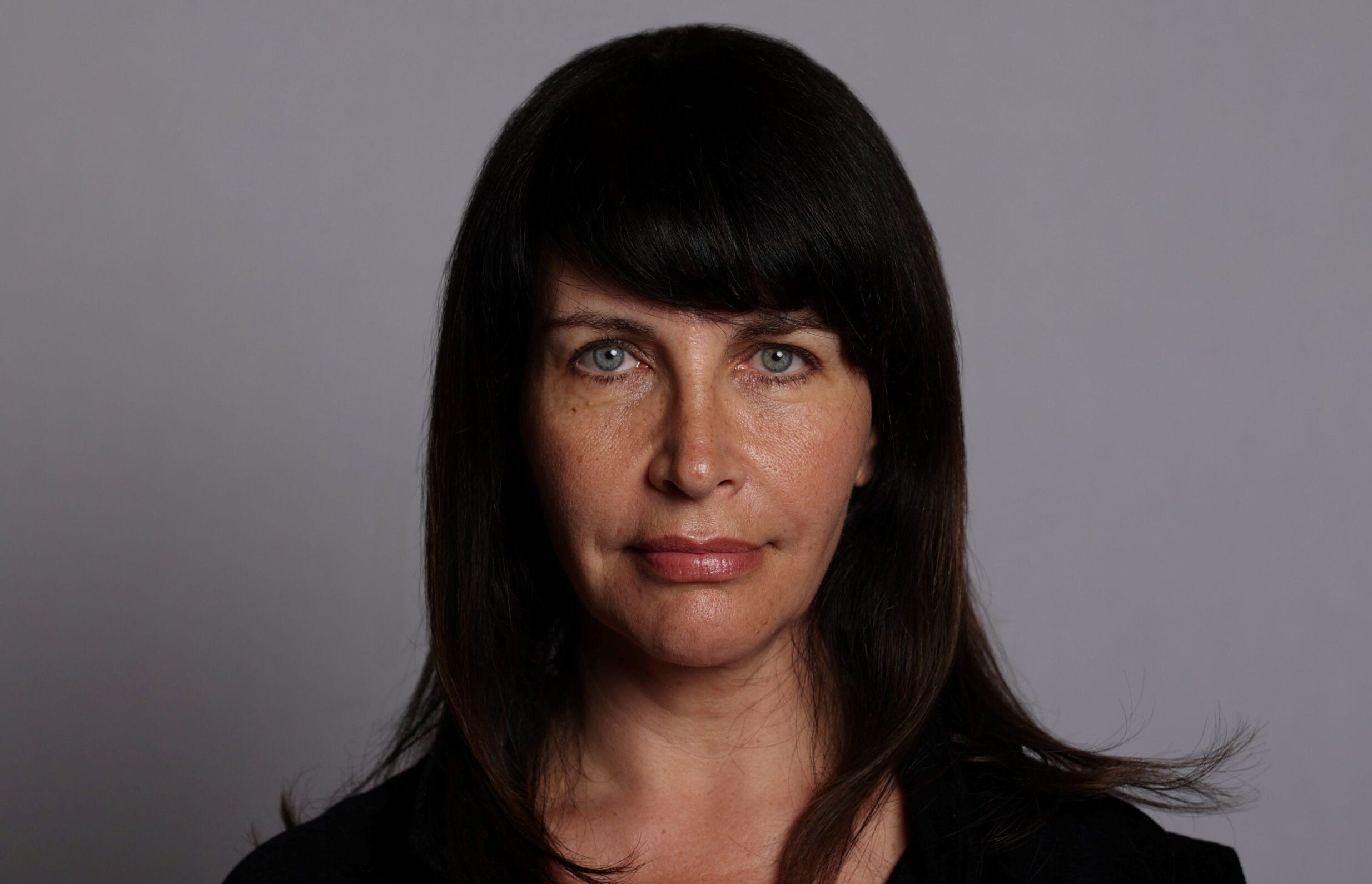
Editor’s note: Einat Wilf is one of the most thoughtful voices in Israeli public life. A prolific writer, gifted speaker, and fierce advocate, she recently added another item to her already impressive résumé: founder of a political party. This piece — her first since announcing the launch of her new movement, Oz, just three weeks ago — offers a compelling vision for an Israeli politics that rises above our tired binaries and provides valuable food for thought as Israel enters an election year, with many pivotal debates still ahead. Shabbat Shalom from Jerusalem. — A.M.
“Seriously? Another party? Who needs another party?”
That is the most common refrain to my announcement that I have established a new political party titled Oz — no, not the wizard, but the Hebrew word for strength and determination (or, as the writer Tom Gross said to me, “May the Oz be with you”).
But we do need more political parties, more political candidates, and, most important, new ideas for the country.
This is what the Oz Party seeks to do.
After October 7, this need became unmistakably clear. In the weeks following the massacre and invasion, I found that far more people were suddenly listening to ideas I had been writing and speaking about for years — ideas that, in many ways, had anticipated the failures that day exposed. It was then that I realized I had not only a vision for the State of Israel but also a practical roadmap to achieve it. And I saw, with absolute clarity, how far we had fallen short.
Having lived through the complete disappearance of the state structure in the days and weeks after the massacre, it became painfully clear that we cannot outsource our leadership, politics and public service to corrupt mediocrities who are living off the sweat of hard-working, fighting and sacrificing Israelis. This was the moment I resolved not only to re-enter political life after more than a decade away, but to do so as the chair of a party that could bring these ideas directly and without distortion to the Israeli public.
Oz aims to break Israel’s long political stalemate by doing something truly extraordinary: focusing on what rather than who. It appeals to all those deeply, viscerally tired of politics, media, and public discourse being organized around a single individual, to the detriment of the urgent need for serious discussion about Israel’s future — domestically, regionally, and internationally.
What Oz brings are ideas that can finally unstick political camps ossified around the outdated categories of “left” and “right” and various sectarian identities. Oz has been built around three key principles:
Pursue Peace Based on Arab and Palestinian Embrace of Zionism
Pursuing peace based on Arab and Palestinian acceptance of Zionism means recognizing the core obstacle that has always stood in the way: the consistent Arab — and especially Palestinian — rejection of the Jewish right to self-determination in any part of the Land of Israel.
In speaking about my own journey — from once assuming the obstacle was occupation and settlements to understanding something deeper — I often quote post-WWII British foreign secretary Ernest Bevin, no friend of Zionism, who explained in Parliament on February 18, 1947, why Britain failed to fulfill its Mandate obligations: “For the Jews, the essential point of principle is the creation of a sovereign Jewish State. For the Arabs, the essential point of principle is to resist to the last the establishment of Jewish sovereignty in any part of Palestine.”
For years I have emphasized that this remains the core of the conflict. It is not about territory but about the Jewish people’s right to exist as a sovereign nation in their ancestral homeland. The wars, terrorism, and suffering are all consequences of this rejection.
Once this truth is understood, it becomes clear that true peace will be possible only when Arabs — and especially Palestinians — end their century-long war against Zionism. Peace will come when the destructive ideology I call “Palestinianism” is replaced with a positive aspiration to live alongside a Jewish state rather than on its ruins. That means, among other things, that millions of Palestinians — particularly in Gaza, the West Bank, and Jordan — must finally recognize that they are home and not “refugees” entitled to “return” to sovereign Israel.
Oz’s vision is therefore to pursue peace by replacing “Palestinianism” with what I call Arab Zionism: Arab recognition of the equal right of the Jewish people to self-determination in their historic homeland. Even if realization is distant, this must become the organizing principle of Israel’s foreign and security policy. After decades of failed shortcuts, only such a long-term, patient vision can lead to genuine progress.
This idea cuts across the old left–right map. On one hand, Oz insists that Israeli leadership must constantly articulate a vision of peace — a traditionally “left-wing” stance. On the other, it rightly maintains that peace requires nothing less than the end of Palestinianism and the rise of Arab Zionism — a supposedly “right-wing” position.
Public Services for Those Who Serve the Public
When Oz calls for public services to be provided only to those who defend Israel militarily, it is speaking not only about national defense but about the nature of the welfare state itself. Advanced welfare systems — those that expand freedom, quality of life, and opportunity — depend on solidarity and mutual responsibility.
Historically, this shift from extended-family support networks to national welfare mechanisms rested on a shared sense of obligation among citizens. Their willingness to pay taxes to fund high-quality public services in education, health, welfare, and transportation depends on that solidarity.
In Israel, especially until peace is achieved — as October 7 starkly reminded us — the highest expression of mutual responsibility is military service. Oz therefore proposes mandatory service in the Israel Defense Forces for all citizens — Jews and Arabs, men and women, secular, religious, and ultra-Orthodox — at age 18.
This position is “left wing” in its insistence on equality and the importance of the welfare state, yet “right wing” in tying rights to duties. Once all 18-year-olds receive equal draft orders, those who refuse to serve would be deemed to have abdicated mutual responsibility and would not receive state-funded public services. High-quality education, healthcare, transportation, and welfare benefits would be provided equally to those who serve and to their families.
Complete the Zionist Revolution: From Diasporic Mindset to Sovereign Conduct
The third pillar of the Oz platform is the most fundamental. Over centuries of exile — when Jewish communities lived at the mercy of others — patterns of thought and behavior developed to ensure survival under powerlessness and transience. These included prioritizing the present over shaping the future, waiting for a messiah rather than acting in history, and focusing on internal disputes rather than external threats.
These habits, though once necessary, are ill-suited to sovereign life. Many of Israel’s current problems stem from the incomplete transition from a diasporic mentality to sovereign responsibility. Addressing Israel’s challenges therefore requires advancing this mental and civic transformation.
The Oz website outlines several practical implications, from religion–state relations to civil service reform. One long-standing example is judicial reform. Here, the argument is that resolving the struggle between the judicial and executive branches — assuming one truly seeks resolution — requires strengthening Israel’s only elected sovereign body: the Knesset. Both the judiciary and the executive must return powers accumulated over decades and recognize parliamentary sovereignty. The Knesset, in turn, must elevate the quality and conduct of its members to reflect its role as the representative of the entire public. Again, this combines “left-wing” respect for the rule of law with “right-wing” insistence on parliamentary supremacy.
My journey has only begun, but I have already noticed not just interest, curiosity, and enthusiasm, but something more important: that Oz is giving a political home to the politically homeless, and allowing very different people to feel that they have a place. If I began this essay with the skeptics, I will end with those who found a home — people telling me that “you are the only person my father-in-law and I can agree about over Shabbat dinner,” that “this is the first time our Likudnik grandma came to the same political gathering with the rest of the family,” that “after my wife saw one of your videos we are no longer fighting over politics,” and that “my left-wing friend abroad sent me one of your videos, and now we are close friends again.”
There is no way of knowing if Oz will succeed. It is up to the Israeli public. But I believe that October 7 created a tear in time, revealing a deep thirst for ideas, vision, and genuine leadership — a thirst we have not seen in a very long time.
Dr. Einat Wilf is the founder of the Oz Party. A leading Zionist thinker and former Member of Knesset, she is the author of seven books, the most recent of which is “We Should All Be Zionists.” She holds a Ph.D. from the University of Cambridge.


 | A guest post by
|
Excellent news! I follow Einat Wilf for quite some time, she´s a brilliant mind.
Love you. This is excellent news. As a religious Zionist Jew I feel that in order to vote people must participate in the IDF, or National Service. No service, no vote. Also no more free rides to Charedi sector for not working or serving. Enough is enough. Happy Birthday. I’ve followed you for a long time and have your books. G-d willing I hope to make Aliyah next year with my dog and will be happy to vote for you. Am Yisrael Chai🦁💪🇮🇱