

Reading Zachor in the Bomb Shelter
As Israel and the United States battle the Iranian regime, past and present converge in Jewish texts that take on renewed meaning

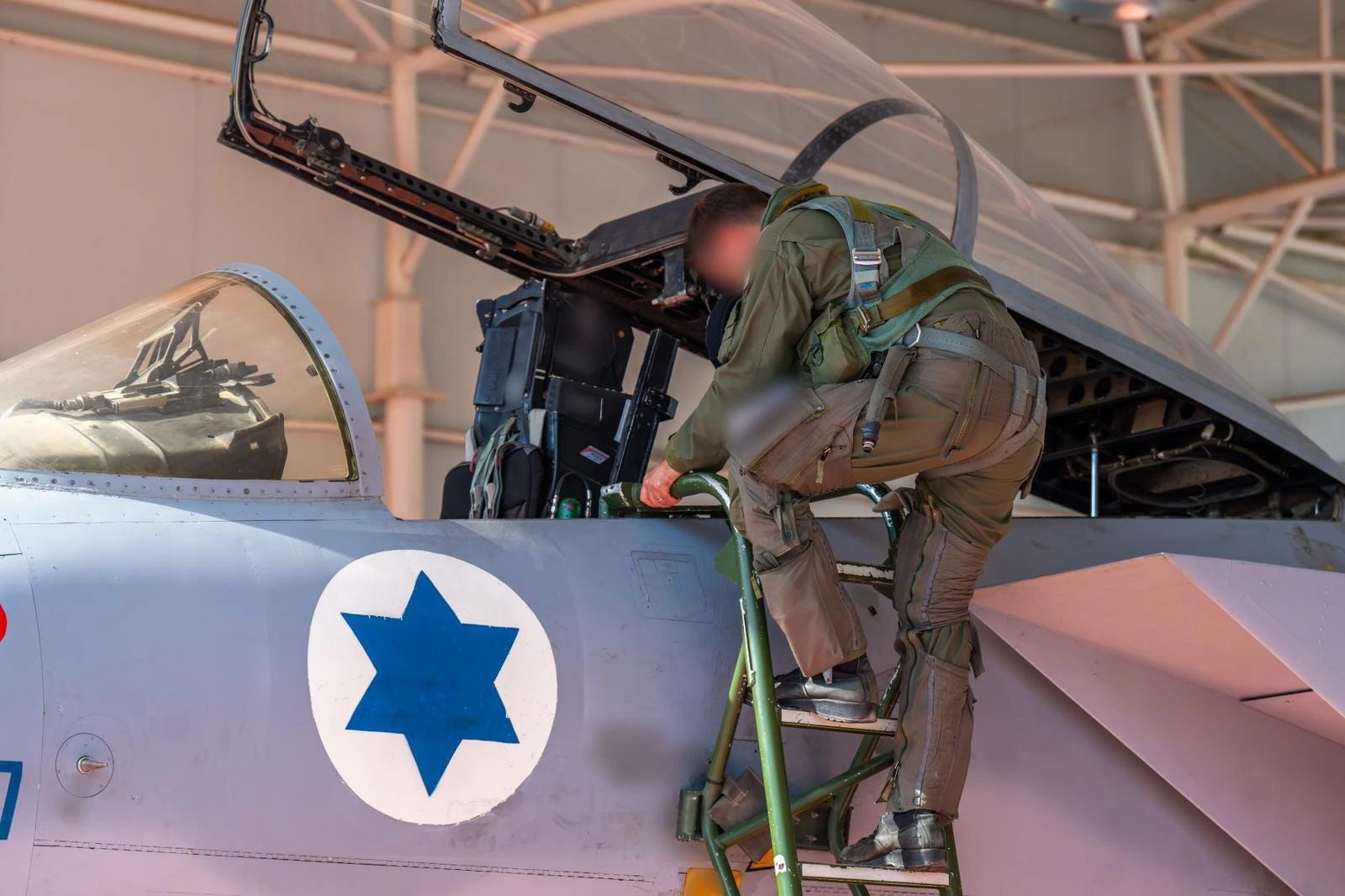
Editor’s note: Since the United States and Israel launched their joint military operation targeting the Iranian regime Saturday morning, I have spent much of the time on various news networks commenting on the latest developments and offering an on-the-ground perspective. In between interviews and dashes to the bomb shelter, however, I have tried to sort out my thoughts about the broader meaning of what we are currently experiencing. This is the result. May our men and women in uniform return safely from their missions and may Iranians, Israelis, and all the nations of the region share a new era of peace. — A.M.
Like October 7, this past Shabbat morning began with a siren.
After all the bleary-eyed residents of my Jerusalem building had made their way down to the communal bomb shelter, however, it turned out that it was merely a loud and obnoxious reminder to stay alert and abide by Home Front Command directives — a sign that hostilities had begun, but we were not in immediate danger.
As on that awful morning two and a half years ago, after a few moments’ hesitation, I decided to make my way to Shabbat services at my nearby synagogue, which meets in the gym of a local elementary school. Though there were fewer people than usual, we had a minyan before too long, and the morning service proceeded as usual.
We were in the middle of the Torah reading when the first real siren sounded. After a brief deliberation, we decided to take our Torahs and prayer books with us and go down into the school bomb shelter, which doubles as an art studio. We moved a few pieces of furniture aside, arranged a bunch of chairs, placed a Torah on a table, and continued the reading.
This was not just any Shabbat. It was Shabbat Zachor, the occasion on which congregations around the world read the passage from Deuteronomy that contains the commandment to remember the Amalekites’ vicious attack on the Israelites as they left Egypt.
“Remember what the Amalekites did to you on your journey out of Egypt, how – undeterred by fear of God — they ambushed you while you were on your way and cut off all the stragglers who were lagging behind,” the text reads.
“Therefore, when the Lord your God gives you rest from all the enemies around you, in the land that He is giving you to possess as an inheritance, you shall blot out the memory of Amalek from under heaven. Do not forget.”
The portion is read on the Shabbat before the holiday of Purim, linking the ancient Amalekites’ attempt to annihilate the Israelites to a latter-day Amalekite’s attempt to do the same. Though he was a Persian king’s royal vizier, Haman, the villain of the Purim story recounted in the Book of Esther, is referred to as an Agagite — a descendent of the Amalekite king Agag and an apparent heir to his biblical forebears’ genocidal ambitions.
Each year, Shabbat Zachor takes place around the anniversary of my grandfather’s passing, so I volunteer to chant the brief passage from the Torah. It is considered a special religious obligation to hear the Zachor reading and a hush tends to fall on the congregation as people cling to every word.
As I unrolled the Torah to recite the blessing, seemingly on cue, a siren blared.
(A congregant — one of several journalists in our community — muttered, “someone should really write something about this”; I told him not to worry.)
I waited for the siren to die down and proceeded with the reading as dull, distant explosions reverberated through the thick concrete walls of the shelter.
For the past couple of days, as I have been following and commenting on the dramatic developments while going in and out of bomb shelters, I have found myself considering the significance of this moment. The historical parallels invite themselves; the echoes of our people’s storied past seem too obvious to ignore.
Like the biblical Israelites, and like the Jews of ancient Persia, we, too, have been beset by genocidal foes — the most powerful of whom happen to control the Persia of today. Like Haman, the leaders of the Islamic Republic have spoken openly about their dreams of annihilation and their vision of a world devoid of sovereign Jewish existence. And like the Jews’ ancient enemies, they have sought to put their words into action, dispatching their proxies to murder Jews in Israel and around the world, exporting their venomous hate across the globe, launching ballistic missiles at Israeli towns and cities, and diligently developing the ultimate means of bringing about the Jewish state’s destruction.
But like the weary Israelites, who summoned the strength to overpower the Amalekites, and like the threatened Jews of Persia, who turned their swords on those preparing to annihilate them, over the past few days, we have experienced a striking turn of fate.
Rather than sitting passively and awaiting the first blow, Israel — alongside its closest ally, the United States — has seized the initiative and taken the fight to Iran. The Islamic Republic is now in crisis, its future uncertain, as Tehran is rocked by constant bombardment methodically destroying the regime’s centers of control. The Iranian people, long oppressed and impoverished by cruel and fanatical rulers, are stirring; expats around the world are rallying, waving American and Israeli flags alongside the historic flag of Iran. And just as Haman and his sons were hanged on the gallows he had prepared for Mordechai, Ali Khamenei and several of his children and intended successors are now dead, killed by bombs dropped from aircraft emblazoned with the Star of David.
But here in Jerusalem, rather than immediately rejoicing upon our enemies’ demise, we pause.
Unlike the rest of the world, where those who had abstained from food and drink during the solemn Fast of Esther immediately transition to the festivities of Purim, here we wait 24 hours before we celebrate what is known as Shushan Purim — a phenomenon unique to Jerusalem and other ancient walled cities.
In many ways, that moment of contemplation is where we now find ourselves as a nation.
Despite the stunning military successes of recent days, the future remains unclear. The Iranian regime — whatever remains of it — is still clinging to power. We do not yet know what reality will emerge from this war or how a new Iranian government might relate to its own people, to Israel, or to the world. And, of course, we are still under fire, preparing to read the megillah in our bomb shelters later this evening.
But if Jewish history teaches us anything, it is that, to quote Faulkner, the past is never dead — it’s not even past. Ours is a story marked by danger and deliverance, tribulation and triumph. Time and again, we come back from the brink of annihilation to stun the world and thrive.
Tonight, as on Shabbat, we will read an ancient text about a threatened people who vanquished their enemies and survived, and that story will resonate more powerfully than ever because it is our own.
Happy Purim.


Thinking of all of you guys, hunkered down in shelters, freeing the world from tyrants. Our hearts are with you 💙🙏✨