


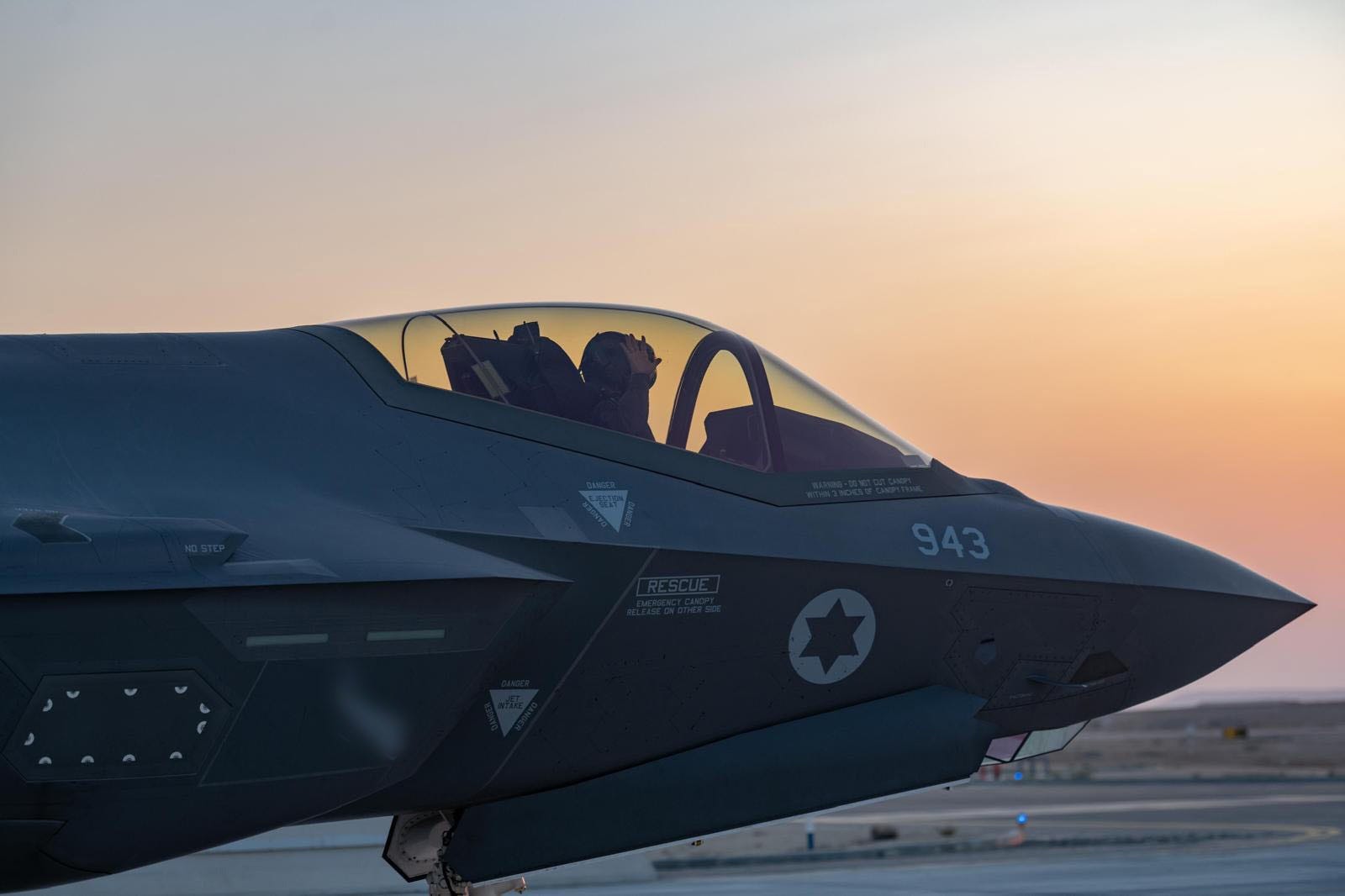
As the region and the world hold their collective breath, waiting to see whether this two-week respite in the war yields an agreement, a return to hostilities, or a somewhat longer pause, it is worth taking stock of how the war has unfolded and what it has revealed — to the international community, to the nations of the Middle East, to the countries that launched this campaign, and not least to Israelis themselves.
First and foremost, this war has proven its own necessity. The Iranian regime’s behavior over the past six weeks has demonstrated — to its neighbors and to the world — that it cannot be trusted, that it poses a grave threat to regional and global security, and that it must be denied the ability to develop and deliver the ultimate weapon.
The regime has, of course, lied for decades about the nature and scope of its nuclear program, as both the International Atomic Energy Agency and official documents seized by Israel from a Tehran warehouse in 2018 have shown. Despite an oft-cited fatwa (religious edict) supposedly issued by the late Supreme Leader Ali Khamenei in the 1990s — and despite repeated Iranian denials — Iran has had a military nuclear program since the late 1980s, has conducted secret nuclear activities in multiple undeclared sites, and has enriched uranium to levels far exceeding any peaceful civilian need. Iranian negotiators have reportedly boasted to their American counterparts that their country is already in possession of enough highly enriched uranium to build 11 nuclear bombs — an alarming admission.
It now turns out that the Iranian regime has lied about another central element of its military capabilities. Khamenei declared in 2017 that his regime would not develop ballistic missiles with a range exceeding 2,000 kilometers, an assertion echoed by Iranian officials ever since. Just three days before the start of the current war, Iranian Foreign Minister Abbas Araghchi told an Indian news website that his country was not developing long-range missiles. “We have intentionally limited the range of our missiles to below 2,000 kilometers because we don’t want them to be seen as a global threat,” he said. Three weeks later, on March 21, Iran launched a pair of missiles at Diego Garcia, the joint American-British base in the Indian Ocean — roughly 4,000 kilometers from its shores.
The realization that much of Europe may now be within range of Iranian missiles has generated alarm among European officials and analysts, raising urgent questions about the adequacy of existing missile defenses. “This is for us a new dimension to the war,” one senior European Union official told Radio Free Europe in typical diplomatic understatement. Pressed on whether Iranian missiles can now reach London, British Defense Secretary John Healey repeatedly refused to answer, mumbling that his government has “no assessment that Iran has any plans to attack,” a statement unlikely to reassure anyone paying attention.
The Diego Garcia attack also heightened concerns about covert Iranian efforts to develop even longer-range intercontinental ballistic missiles capable of hitting the United States, a threat identified by U.S. defense and intelligence agencies more than a decade ago and made all the more acute by the revelation that Iran has already doubled the range of its missiles.
While reasonable people can disagree about various aspects of the war’s timing, execution, and strategy, Iran’s conduct during the war — including its ferocious missile and drone attacks against many of its neighbors, its blockade of the Strait of Hormuz, and its demonstration of the heretofore hidden capacity to target points well beyond the region — has underscored that a military campaign aimed at crippling its nuclear and missile programs and limiting its ability to threaten its adversaries was not only prudent but necessary.
To two of Iran’s neighbors, the United Arab Emirates and Bahrain, the war has also served as a proof of concept for the Abraham Accords, the series of agreements that formalized their alignment with the U.S. and Israel. Born of both shared interests and a common threat, the accords have been instrumental to both countries’ security as they have come under sustained attack by Iran. While several countries in the region have relied on Israeli-made air defense systems to neutralize Iranian missiles and drones, U.S. Central Command (CENTCOM) Commander Admiral Brad Cooper revealed that Israel is playing a far more active role in their defense. “Israel is attacking drones and ballistic missiles that are aimed at Arab countries, attacking and defeating them,” he told Iran International on March 23.
Conversely, Saudi Arabia, Kuwait, Oman, and Qatar — none of which have joined the accords — have discovered that publicly cozying up to Iran and eschewing ties with Israel does not render them immune to Iranian attack. Qatar, which has elevated hedging its bets to an art form, has been particularly affronted by the Iranian assault, as has Oman, which mediated the previous round of talks between Washington and Tehran. Combined, the two countries have been targeted by roughly 300 Iranian drones and missiles out of some 5,000 attacks directed at Gulf states overall (the UAE alone has absorbed roughly half).
It is perhaps no surprise, then, that senior officials believe the war may well prove to be a watershed moment in the relationship between Israel and Gulf states.
“I think Iran’s full-throttle attack on the Gulf states will actually strengthen the Israeli role in the Gulf, will not diminish it,” veteran Emirati diplomat Dr. Anwar Gargash told the Council on Foreign Relations on March 17. “We’re not seeing 2,000 Israeli missiles and drones targeting us. We’re seeing 2,000 Iranian missiles and drones targeting us.”
“For countries that have relations with Israel… this relationship, in my opinion, will be even more strengthened. For countries that don’t have [relations with Israel], I expect [that] more channels will be open,” Gargash added. “Iran has actually hurt its own case at being aggrieved against by the United States and Israel by targeting the Gulf, and [has] demonstrated the intention that it had for its own neighbors and for the region.”
While some Gulf countries — chief among them Saudi Arabia — reportedly pushed hard for a U.S. military campaign against the Iranian regime and others opposed it, there is a growing consensus among them that ending the war before Iran is defanged would be a fateful mistake. “Ending the war with Iran still in possession of the tools it is currently using to target [Gulf states] would be a strategic disaster,” a Gulf official recently told The Times of Israel. “We want this war to end with Iran stripped of the capabilities to harm its neighbors,” another official told the Times.
To the United States and Israel, the war has demonstrated both the durability of the U.S.-Israel defense alliance and Israel’s status as an indispensable and peerless U.S. ally. The degree of cooperation, interoperability, and information sharing between the two militaries in both the lead-up to the war and throughout its duration has been described as unprecedented, reaching levels of operational synergy that the U.S. has never enjoyed with any of its closest allies. U.S. Secretary of Defense Pete Hegseth has described Israel as “an incredible and capable partner.”
“To our Israeli allies, thank you for being a brave, capable, and willing ally on this battlefield,” he said in a Pentagon press conference earlier this week. “The rest of the world and the rest of our so-called allies saw what real capabilities look like. They should take some notes.”
In the run-up to the war, several Middle Eastern countries that host American military bases, enjoy American protection, and are considered U.S. allies informed the U.S. that they would not allow their territory to be used for offensive action against Iran (all have since been targeted by Iranian attacks anyway). Israel, by contrast, readily offered its own airbases for U.S. use and American and Israeli planes have shared the same runways as they embark for sorties in the skies over Iran.
As the U.S. considers its postwar military footprint in the region, Israel has reportedly invited the U.S. to relocate some of its bases from the Gulf to Israel. “We have proved our value of late as a central ally of the United States, one that provides not only stability, but also significant operational and intelligence capabilities,” an Israeli official told Israel’s Channel 12. “American bases in Israel would create a strategic advantage for both sides.”
Finally, to Israelis, this war has shown that they have learned one of the critical lessons of October 7: that Israel cannot and will not stand idly by as foes sworn to its destruction and to the wanton murder of its people develop the means to achieve those aims.
Since that disastrous day two-and-a-half years ago, Israel has taken the fight to adversaries near and far, dealing crushing blows to Hamas, Hezbollah, Palestinian Islamic Jihad, the Houthis, and now the head of the snake, Iran. Twice in the past year — during the Twelve-Day War in June and in the current conflict — it has launched preemptive strikes to remove the threat posed by the Islamic Republic. While the final outcome of Operation Roaring Lion is not yet known, it is already clear that Iran’s leadership, nuclear program, missile capabilities, and military industry have been severely impaired, even if they have not been wiped out entirely. The message is clear: Israel will no longer wait for a clenched fist to strike; it will smash the hand before it has a chance to do so.
But Israelis have learned another important lesson, and that is that the time has come for them to chart their own course.
Forty-two Israelis have been killed in this war. All 29 victims of the Iranian attacks have been civilians, including five children and teenagers; 12 soldiers and one civilian have been killed in the campaign against Hezbollah since the Iranian proxy army started firing missiles into Israel on day two. More than 7,100 Israelis have been wounded and over 6,300 have had to be evacuated from damaged or destroyed homes. Over the course of six weeks, Israelis have endured a cumulative total of 96,428 missile sirens due to some 1,435 drone and missile attacks from Iran and 4,400 from Lebanon. Schools and many businesses have been closed for most of the war, placing a tremendous burden on families already struggling with the compounding trauma of having to run to bomb shelters throughout the day and night. Gatherings have been limited, people have remained close to home, and air traffic has been reduced to a trickle. The disruption to everyday life has been profound.
And yet Israelis know that were it not for their remarkable discipline and forbearance, for the near-ubiquity of bomb shelters across the country, for the heroic efforts of Israeli pilots to destroy Iranian missiles before they can be launched, and for the multilayered air defense systems that destroy the vast majority of incoming projectiles in the air, the scope of both casualties and damage would have been far, far worse. And they also know that the alternative to this war — a nuclear-armed Iran — would be immeasurably worse than anything they have endured, which is why more than two-thirds of Israelis support the war’s continuation until its aims are achieved.
Prior to the Twelve-Day War, the prospect of direct military confrontation with Iran — the most powerful of our adversaries, whose leaders chant “Death to Israel” and dedicate enormous resources to bring it about — filled many Israelis’ hearts with terror. Hundreds, if not thousands, of people would be killed, we were told. Our economy would be destroyed. Entire cities would be reduced to rubble.
But we have now endured two wars in which the Islamic Republic has thrown everything it has at us, and we are still standing. Even during the current war’s most intense days, children played outside, cafés were open, and public transit operated. Families celebrated the Purim and Passover holidays responsibly, at home. Roads damaged by cluster warheads were repaved and reopened to traffic within hours.
As I wrote in the aftermath of the June war, the fact that we have weathered yet another war with Iran so successfully should inspire us to ask what we could achieve if we weren’t held back by fear.
Israel is in an election year. Many of the candidates and parties vying for Israelis’ votes across the political map this fall will attempt to draw on our anxieties and our fears. But we have proven, once again, that we are better than that, that we are a nation that can stare down its scariest adversary and seize the day. We should demand a politics of hope and inspiration, of practical solutions to real challenges, rather than a manipulative discourse of darkness and doom. The soldiers who put their lives on the line in our defense, the spouses and loved ones who held down the fort at home, the children who sang happy songs in bomb shelters as missiles exploded overhead — they all deserve better.
The war is not over, and it may yet resume. But the past six weeks have shown that, with a little help from their friends, nations of conscience can still muster the courage and determination to confront those who would threaten them, their neighbors, and the world. The question now is whether they will act on what they have learned — and whether they will do so before the next test inevitably arrives.


I follow Israeli politics from SE Florida. I can’t wait to see the Oz party in action during the upcoming elections.
Dr. Wilf is more than capable. She personifies not only intelligence, but strength, courage, and valor. Oz indeed.
I don't see many Israelis thinking about what comes next with the exception of more of the same, just a question of when. We don't have the leadership that can define and marshal the people behind a compelling vision of the future and until that emerges we are victims of the Bibi ad hoc self-serving moves.